BORGHI DELL’UMBRIA: ITALY’S QUIET MASTERCLASS IN TIMELESS STYLE
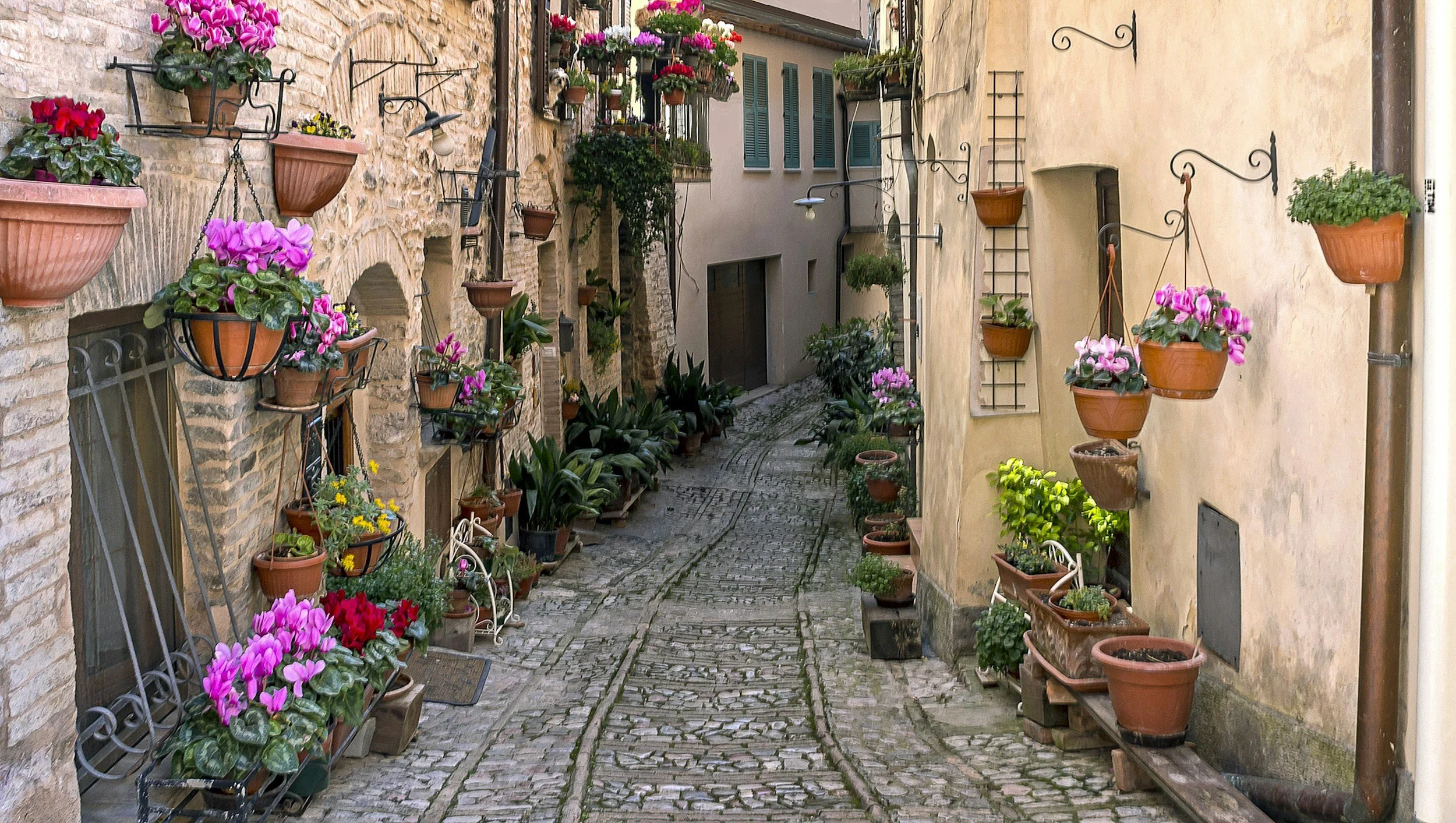
There are places that perform beauty loudly, and then there is Umbria. Italy’s only landlocked region does not seduce with cinematic drama in the way the Amalfi Coast does, nor with the polished grandeur of Florence or Rome. Instead, Umbria works more slowly. It reveals itself through stone, shadow, texture, and ritual. Its borghi—those hill towns and small medieval villages that seem to rise directly from the landscape—offer a different kind of luxury: one built on restraint, continuity, and an almost radical faith in atmosphere.
To study the borghi di Umbria is to study a complete aesthetic system. Architecture, food, craft, dress, pace, and landscape are not separated into categories; they belong to the same visual and cultural language. In an era obsessed with novelty, these towns remind us that style is often strongest when it evolves by refinement rather than reinvention.
The Umbrian Aesthetic: Quiet, Grounded, Endlessly Layered
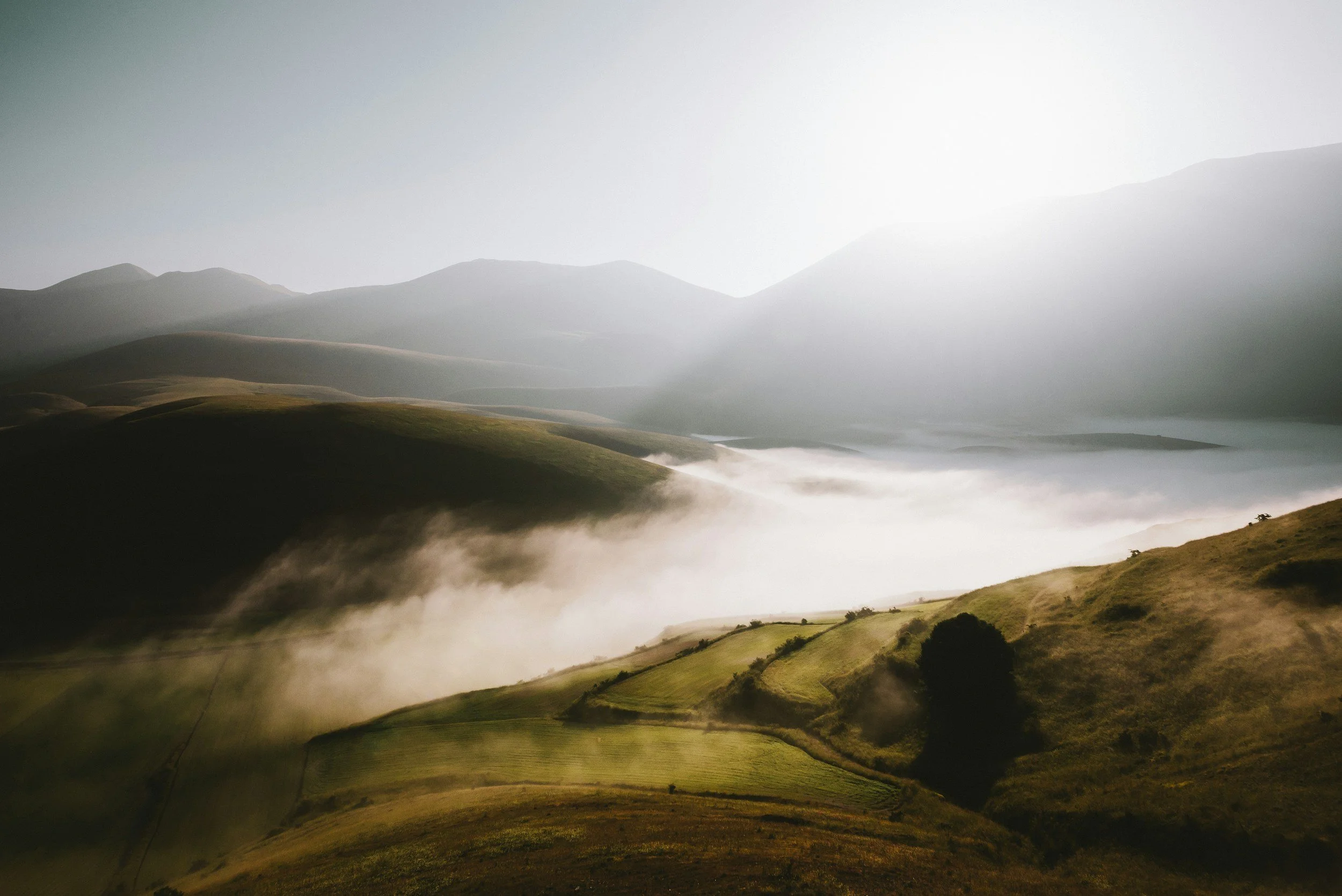
If Tuscany is often framed as curated beauty, Umbria feels more internal. The palette is deeper, cooler, and more devotional: ash stone, weathered terracotta, olive green, cypress black, faded fresco pink, and the soft gold of late afternoon light on limestone walls. The borghi here are not designed to impress at first glance. They are designed to endure.
This is what makes them so compelling from a style perspective. Their beauty lies in patina, proportion, and use. Arches are slightly irregular. Stairways are worn at the center by centuries of footsteps. Wooden doors appear in shades that luxury brands spend years trying to imitate—muted chestnut, chalky sage, oxidized blue. Laundry hangs between old masonry like an accidental installation. Geraniums spill from window boxes without looking staged. Nothing begs to be photographed, yet everything is photogenic.
That paradox is the essence of Umbrian style: elegance without performance.
Why Borghi Matter Now
The renewed fascination with villages, slow travel, and regional identity is not simply a tourism trend; it is a reaction to overstimulation. The borghi di Umbria answer a contemporary longing for places that still possess coherence. They are beautiful, yes, but more importantly, they feel intact.
In these towns, the built environment still reflects the logic of daily life. Piazzas remain social rooms. Churches still orient the skyline. Small food shops are integrated into the rhythm of neighborhoods. Public space is scaled to human bodies, not traffic. The result is not nostalgia in the decorative sense, but a living model of how style emerges when utility, memory, and place remain in dialogue.
For a fashion and design audience, Umbria offers an especially relevant lesson: sophistication does not require excess. It requires editing, confidence, and a deep relationship to material.
Spello: Floral Precision and Stone Softness
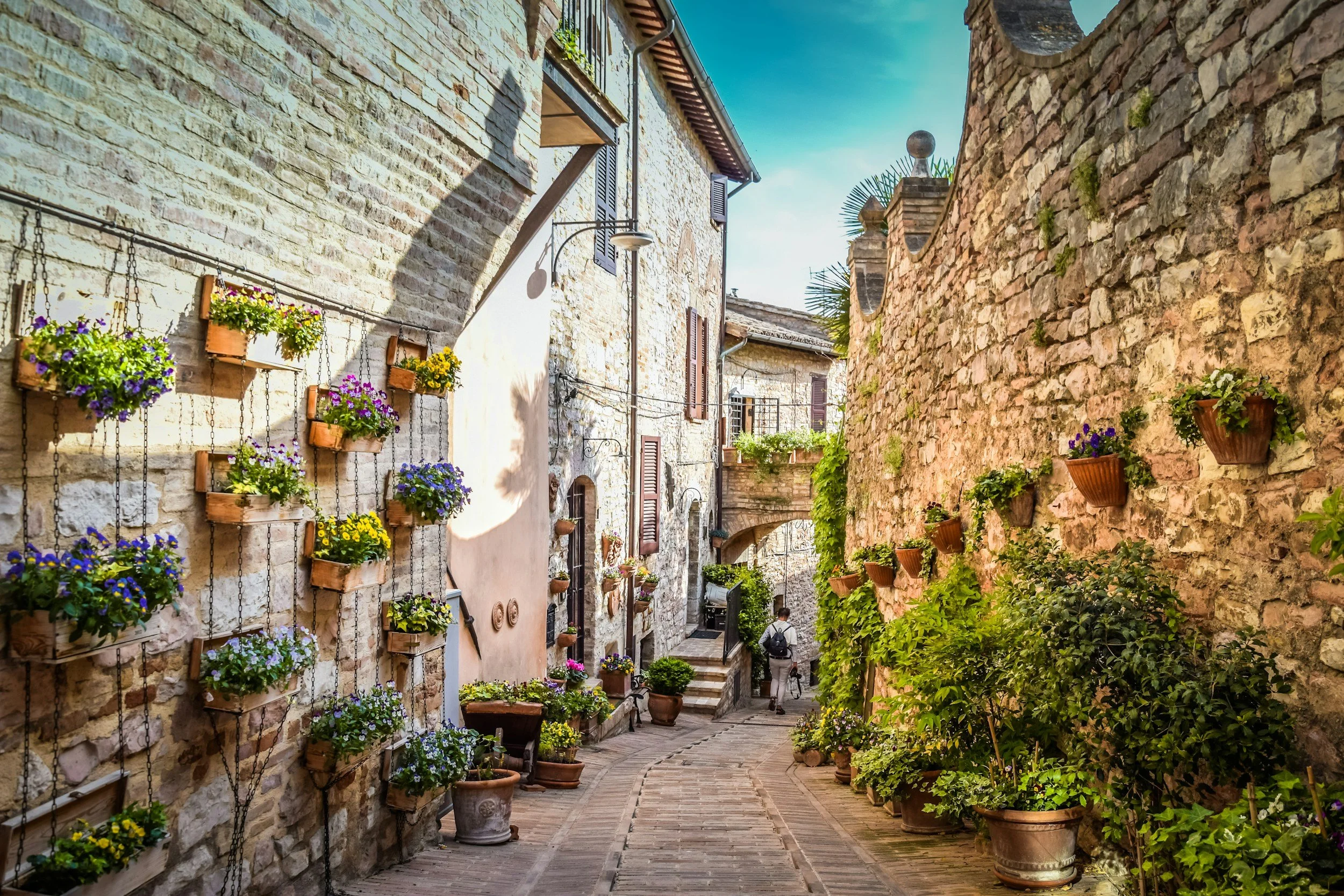
Spello may be one of Umbria’s most visually refined borghi, but its charm is not preciousness. Built from pale pink and honey-colored stone on the slopes of Mount Subasio, it has an almost tactile delicacy. The town is famous for its flowers, and rightly so: in warmer months, its lanes become ribbons of cascading blooms, with facades framed by terracotta pots and climbing plants that soften every hard edge.
Yet what makes Spello memorable is not floral abundance alone. It is the contrast between the strict geometry of Roman and medieval stonework and these moments of lush improvisation. The town feels like a lesson in balance: structure and softness, discipline and romance.
For the style observer, Spello reads almost like an impeccably composed interior—minimal in form, expressive in detail. It suggests linen dresses, woven bags, sun-warmed walls, and the understated confidence of pieces that do not need embellishment because the materials speak for themselves.
Bevagna: Medieval Purity Without Spectacle
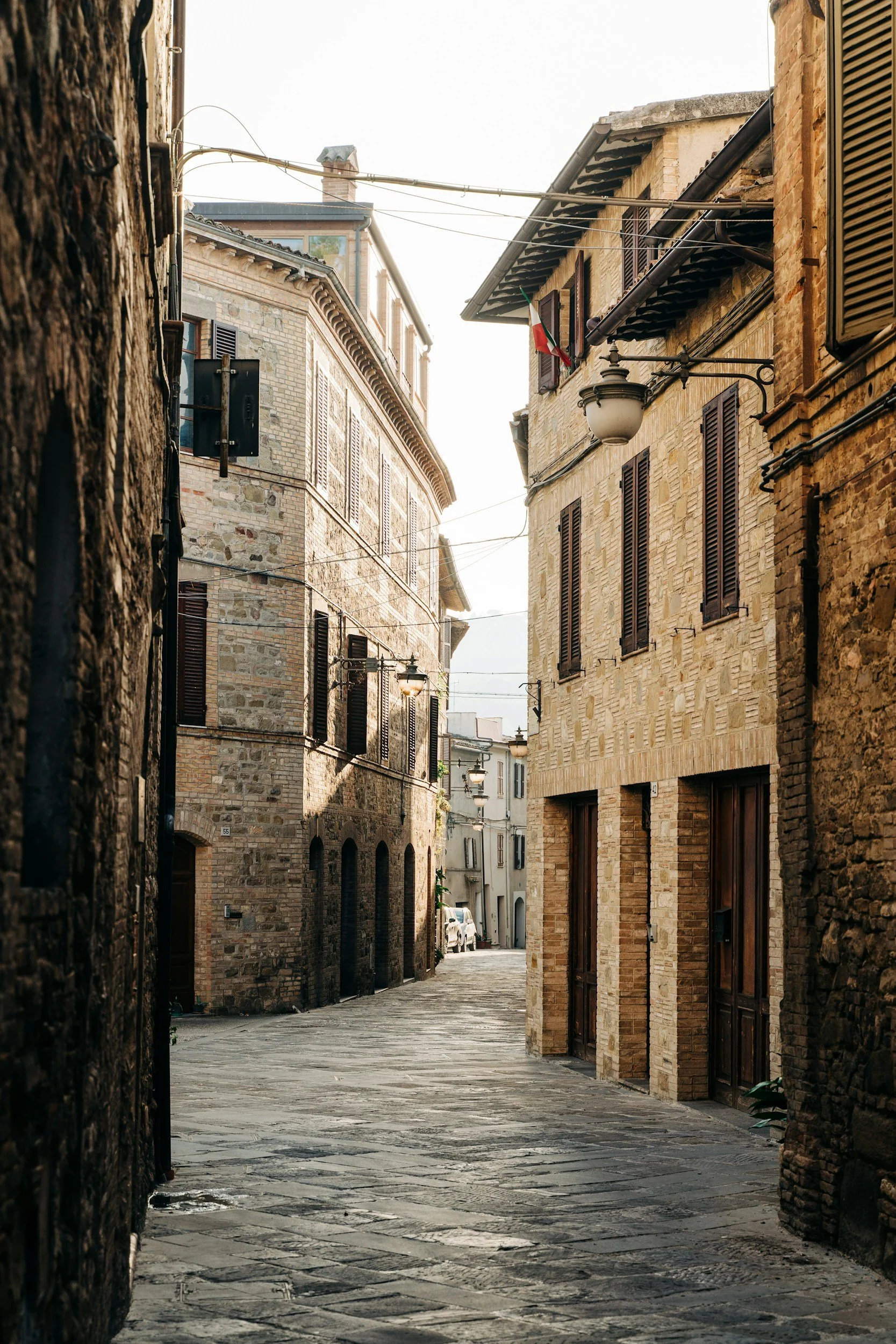
Bevagna is often overshadowed by more famous Umbrian destinations, which is precisely part of its appeal. It is one of the region’s most coherent medieval towns, with a historic center that feels unusually untouched by decorative overcorrection. Here, beauty is architectural and civic. The piazza is broad and harmonious; churches sit with quiet authority; streets are intimate but never claustrophobic.
There is a severity to Bevagna that style-minded visitors may find irresistible. It has none of the sugary prettiness that can make heritage destinations feel theatrical. Instead, it offers clean lines, muted surfaces, and an almost monastic attention to form. The mood is contemplative.
This is where Umbria’s relationship with craftsmanship becomes legible. Artisanal workshops, paper-making traditions, weaving, and locally rooted food culture all reinforce the sense that objects should be useful before they are ornamental. In a design culture increasingly hungry for authenticity, Bevagna feels less like an escape and more like a corrective.
Montefalco: The Balcony of Umbria
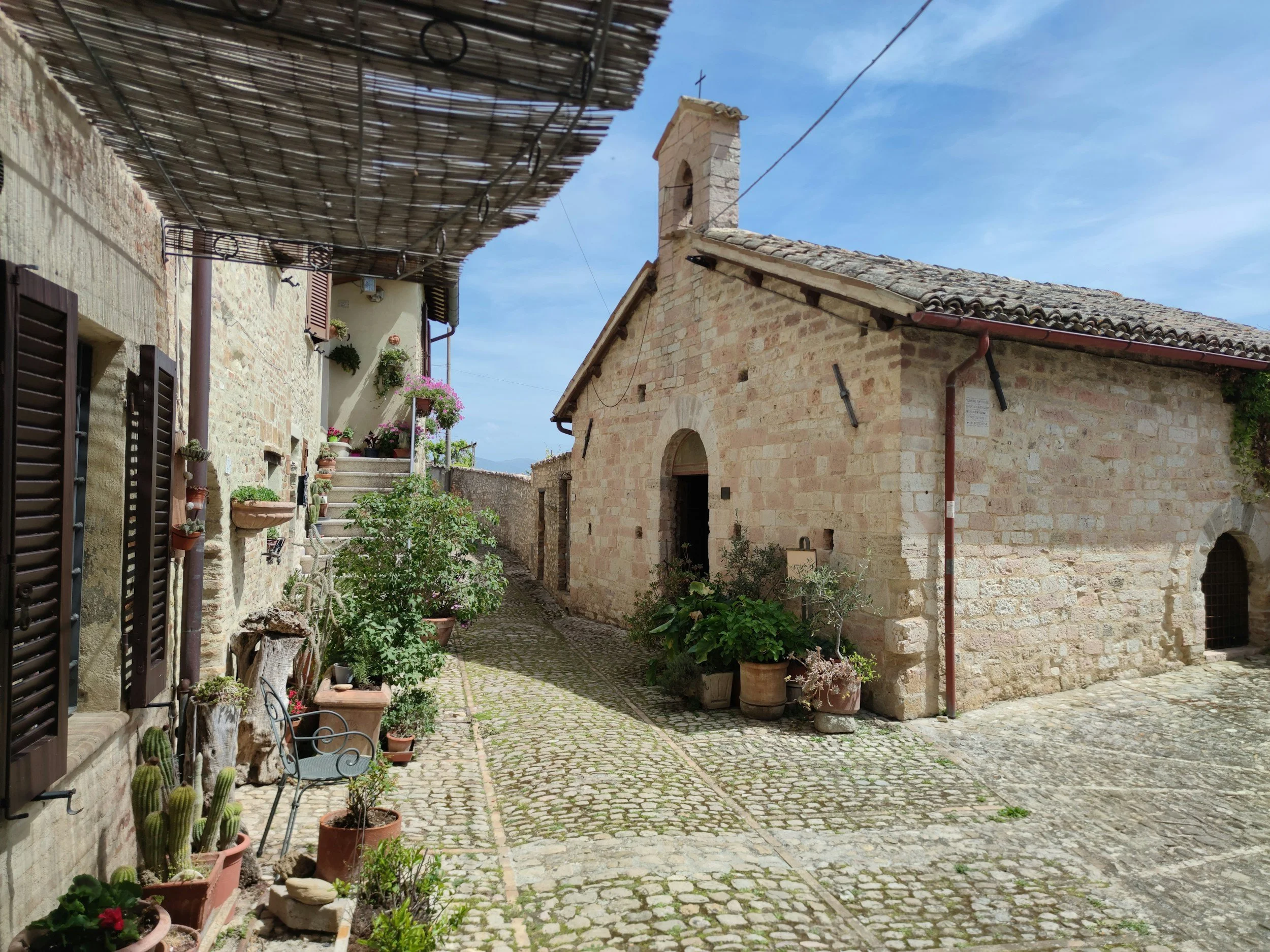
Montefalco is often called the “Balcony of Umbria,” and the phrase is apt. Perched high above vineyards and fields, it offers broad views that turn the landscape itself into part of the town’s visual identity. Unlike borghi that fold inward, Montefalco also looks outward; it is as much about horizon as enclosure.
That openness shapes its style. Montefalco combines fortified medieval character with a softer agricultural elegance, thanks in no small part to the surrounding wine culture. This is Sagrantino country, and the town carries that richness in its atmosphere: robust but not heavy, refined without fragility.
Its visual language is a study in saturation and restraint—deep red wines, rough stone walls, polished wood tables, cool church interiors, and sunlit terraces. It is perhaps the most sensual of Umbrian borghi, but its sensuality is grounded. Nothing glitters unnecessarily. Pleasure here comes through depth: a long lunch, a heavy glass, a worn bench with a view.
Gubbio: Vertical Drama and Medieval Power
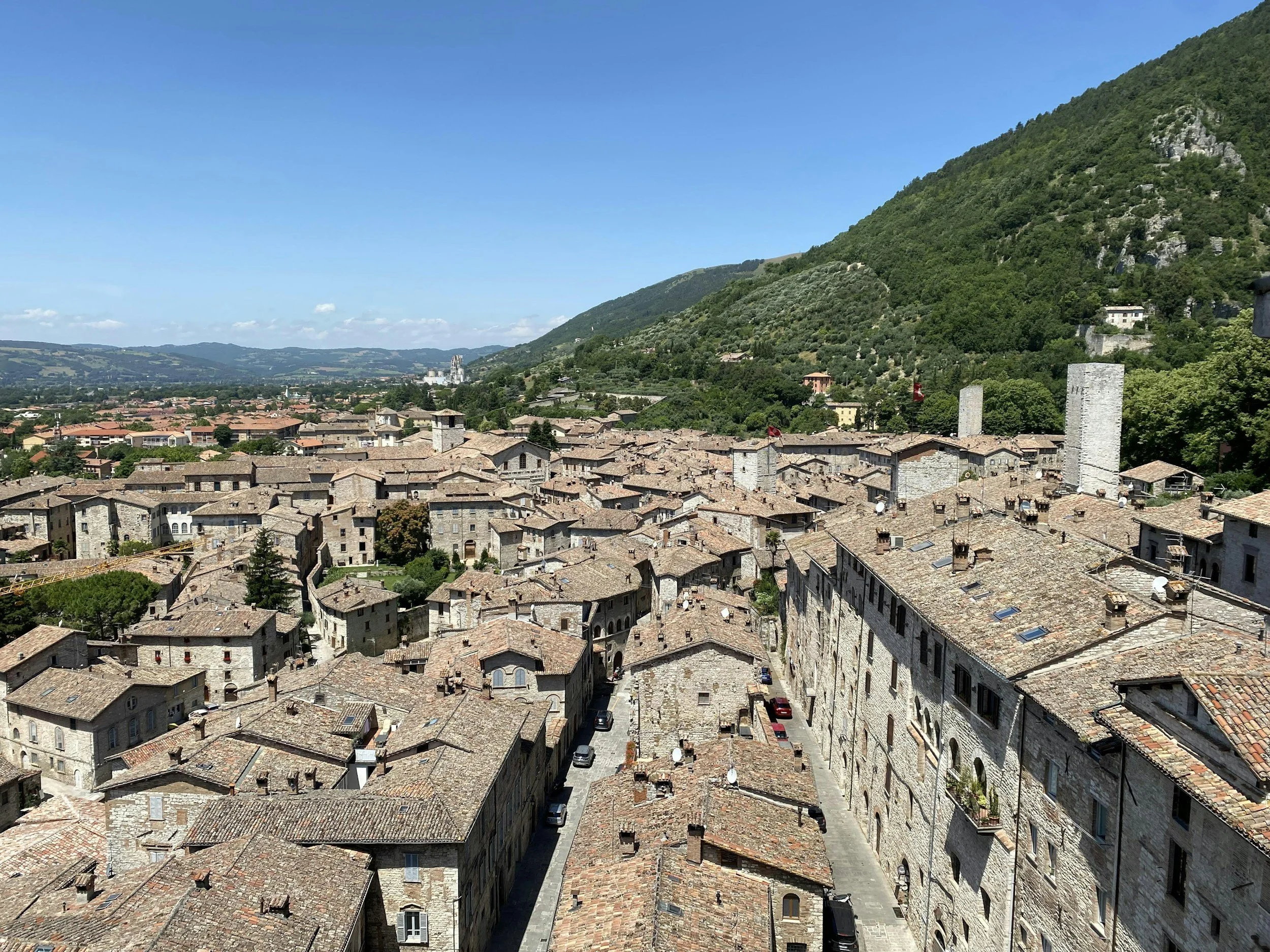
If Spello whispers, Gubbio has presence.
Clinging dramatically to the side of Mount Ingino, Gubbio is one of Umbria’s most striking borghi, not because it is decorative, but because it is powerful. Built in gray limestone, layered vertically, and marked by monumental civic architecture, it carries a kind of severe grandeur that feels almost northern in temperament. The town’s streets rise sharply, opening unexpectedly onto vast squares and commanding palazzi.
For style researchers, Gubbio is a case study in how austerity can become seductive. Its chromatic range is narrow—stone, iron, shadow, smoke—but the effect is unforgettable. This is not a village of softness. It is a village of line, mass, and historical weight.
And yet, like all the best-dressed people, Gubbio knows when to relax. Details matter: a ceramic shop window, a small trattoria glowing at dusk, the texture of candlelight against stone vaults. These quieter notes humanize its scale. The result is an atmosphere that feels both formidable and intimate.
Panicale and the Poetry of the Overlooked
Not every Umbrian borgo announces itself immediately. Some of the region’s most memorable places—Panicale, Trevi, Rasiglia, Vallo di Nera, and others—work through intimacy rather than fame. They are smaller, quieter, and often experienced through fragments: a fountain in a tiny square, an unexpected fresco, the scent of woodsmoke, a shutter left half open.
Panicale, in particular, captures the emotional intelligence of Umbrian design. Circular in plan and gently poised above Lake Trasimeno’s landscape, it feels measured rather than monumental. Its beauty is cumulative. One notices how the streets curve, how views are withheld and then released, how silence itself becomes part of the composition.
These lesser-publicized borghi are especially important in the current conversation around taste. They remind us that style is not always about icons. Sometimes it is about the right proportion of emptiness, the right texture of wall, the right relationship between public and private space. Sometimes the most modern idea is to leave things almost exactly as they are.
Material Culture: Stone, Cloth, Clay, Wood
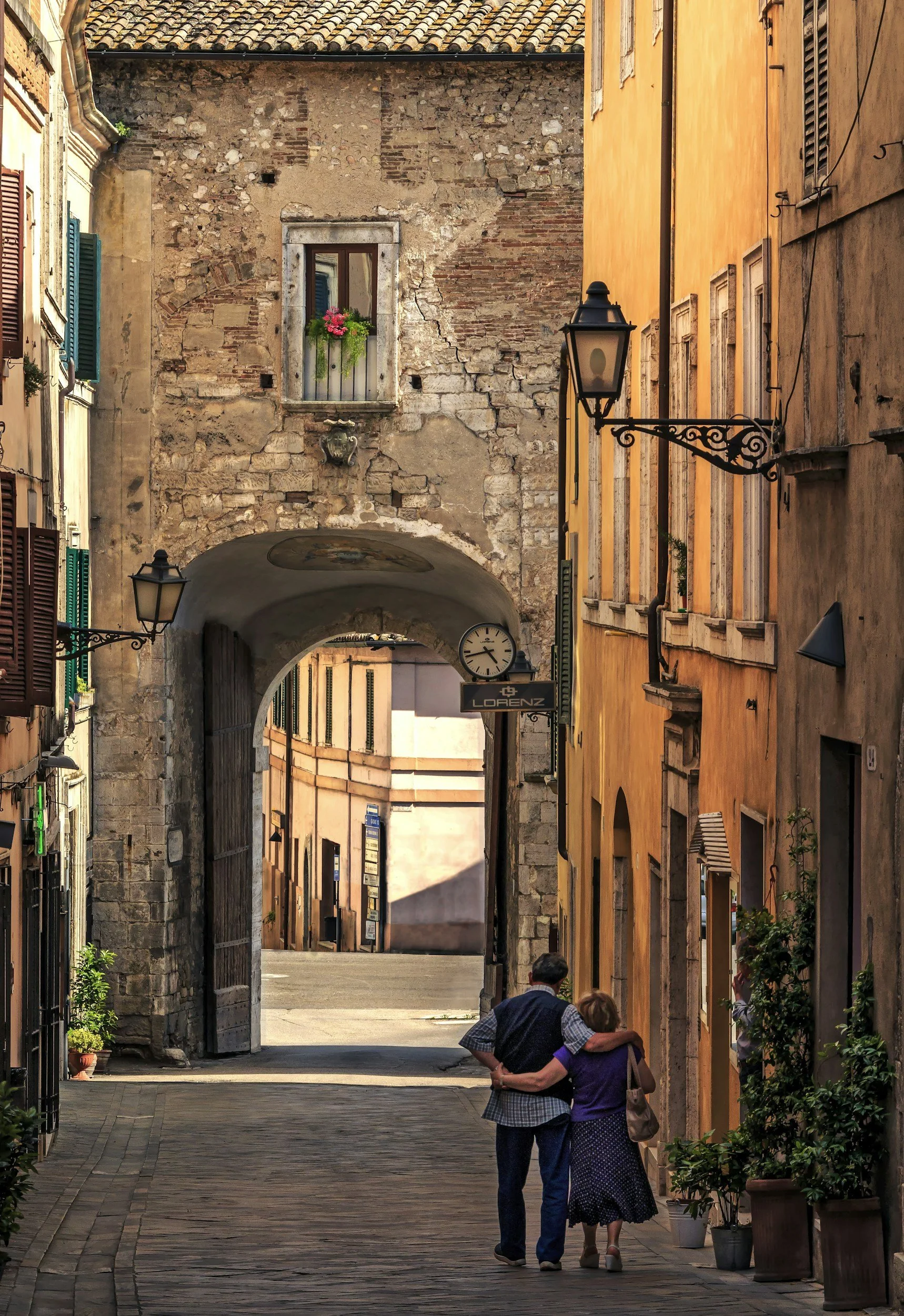
What makes Umbria feel so aesthetically complete is that its borghi are not isolated visual objects. They are sustained by a material culture that still shapes daily life.
Stone is the foundational medium, of course, but not the only one. Umbrian textiles—especially linens, woven goods, and rustic household fabrics—carry the same values as the towns themselves: durability, tactile intelligence, modesty. Ceramics and tableware tend toward utility sharpened by beauty. Olive wood, wrought iron, hand-bound paper, and locally produced foods all extend the region’s visual language into domestic life.
This is one reason Umbrian villages resonate so strongly today. They offer not just scenery, but a worldview in object form. Everything seems to ask the same question: can beauty be useful, and can usefulness be beautiful?
In Umbria, the answer is yes.
The Fashion Lesson of Umbrian Villages
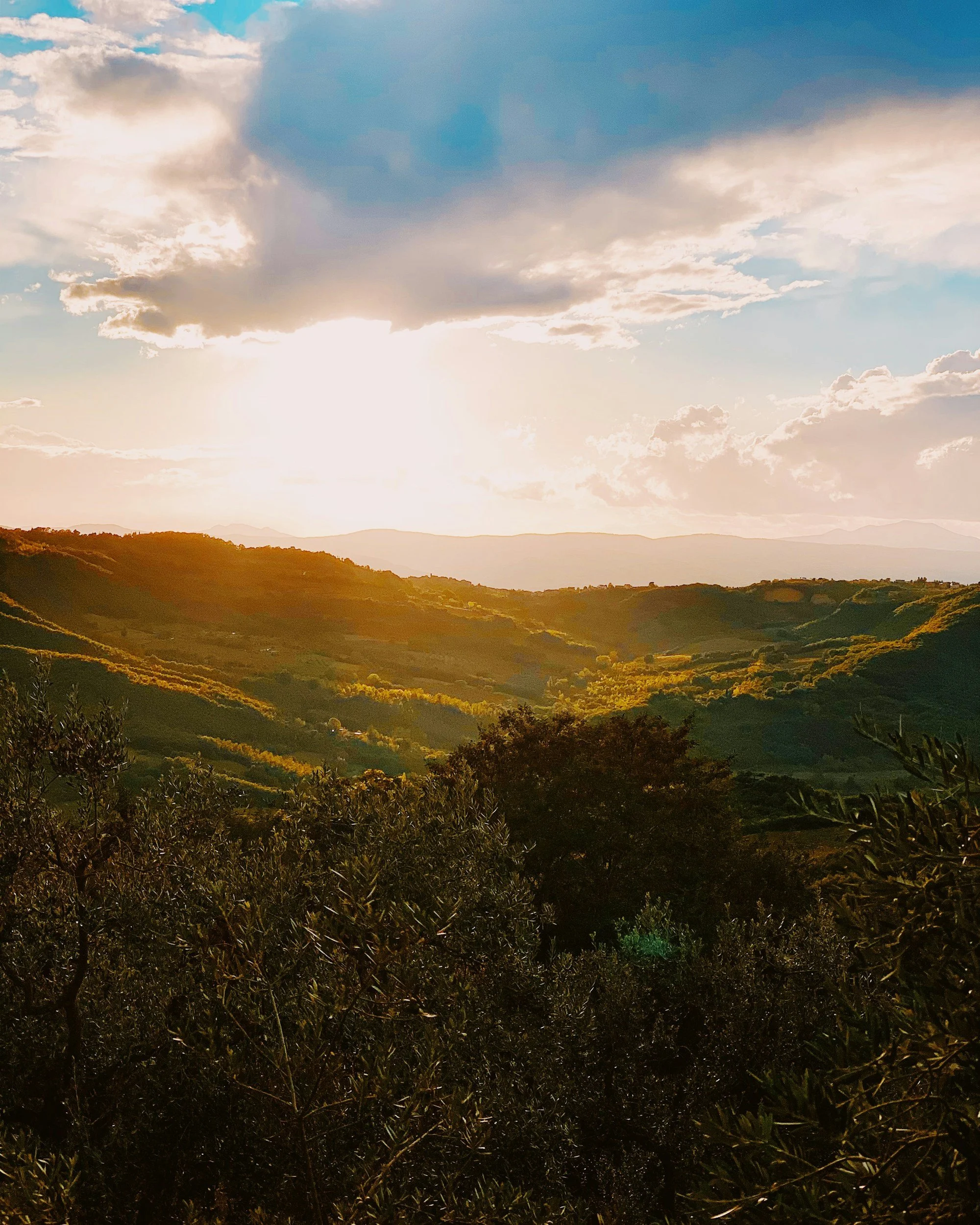
Fashion often looks to Italy for maximal signals of glamour, but Umbria suggests a different lineage—one rooted in texture, repetition, and lived-in refinement. The borghi here teach the value of garments that improve with wear, neutral palettes with subtle shifts, silhouettes that follow the body without forcing it, and accessories chosen for function as much as image.
If one were to translate Umbria into a wardrobe, it would not be trend-driven. It would be composed of washed linen, soft tailoring, dense cotton, leather with visible grain, hand-knit layers, practical sandals, strong outerwear, and jewelry with a sense of inheritance. The emphasis would be on longevity and touch. Less statement dressing, more atmosphere dressing.
This is perhaps why Umbria feels so relevant now. Its style is not anti-fashion, but post-fashion in the best sense: liberated from the anxiety of constant newness.
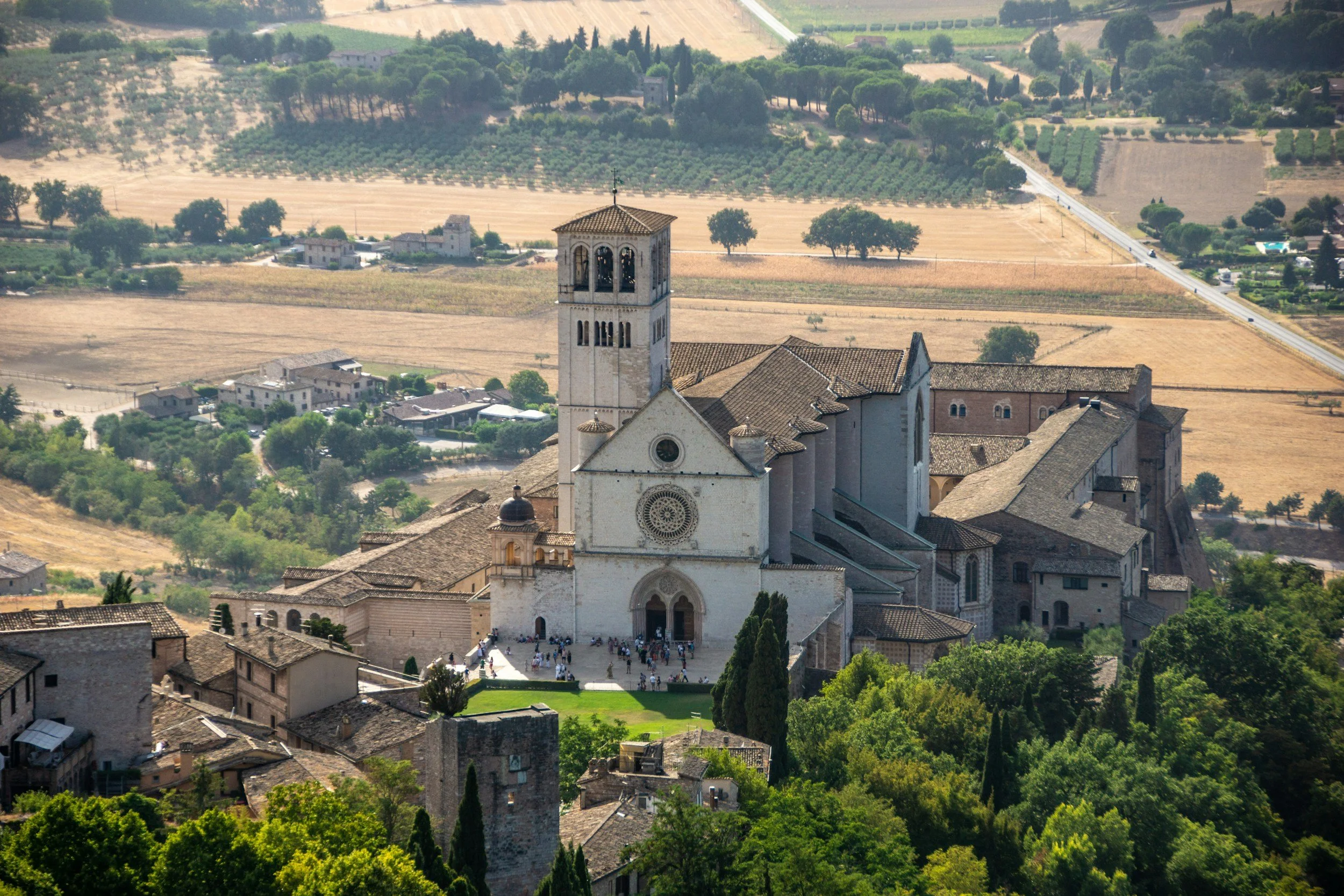
A Geography of Attention
To move through the borghi di Umbria is to relearn attention. You notice light on stone at different hours. You notice the acoustics of narrow lanes. You notice how lunch stretches, how churches cool the air, how even a simple espresso in a small piazza carries a different visual and social weight than it does in a city. These are not just travel pleasures; they are aesthetic disciplines.
And that may be the deepest appeal of Umbria’s villages. They encourage a mode of looking that is increasingly rare. Not scanning, but observing. Not consuming, but dwelling. Not collecting highlights, but absorbing atmosphere.
For The Style Researcher Magazine, that is where the story truly lies. The borghi di Umbria are not merely beautiful destinations. They are archives of proportion, texture, slowness, and restraint. They show us that style can be civic, environmental, and deeply human. They show us that elegance does not always arrive polished. Sometimes it arrives weathered, uphill, and wrapped in silence.
In Umbria, beauty is not a spectacle.
It is a habit.
Discover more about Umbria’s authentic charm and hidden gems with Favola Umbra.
To see more articles visit our section Fashion.